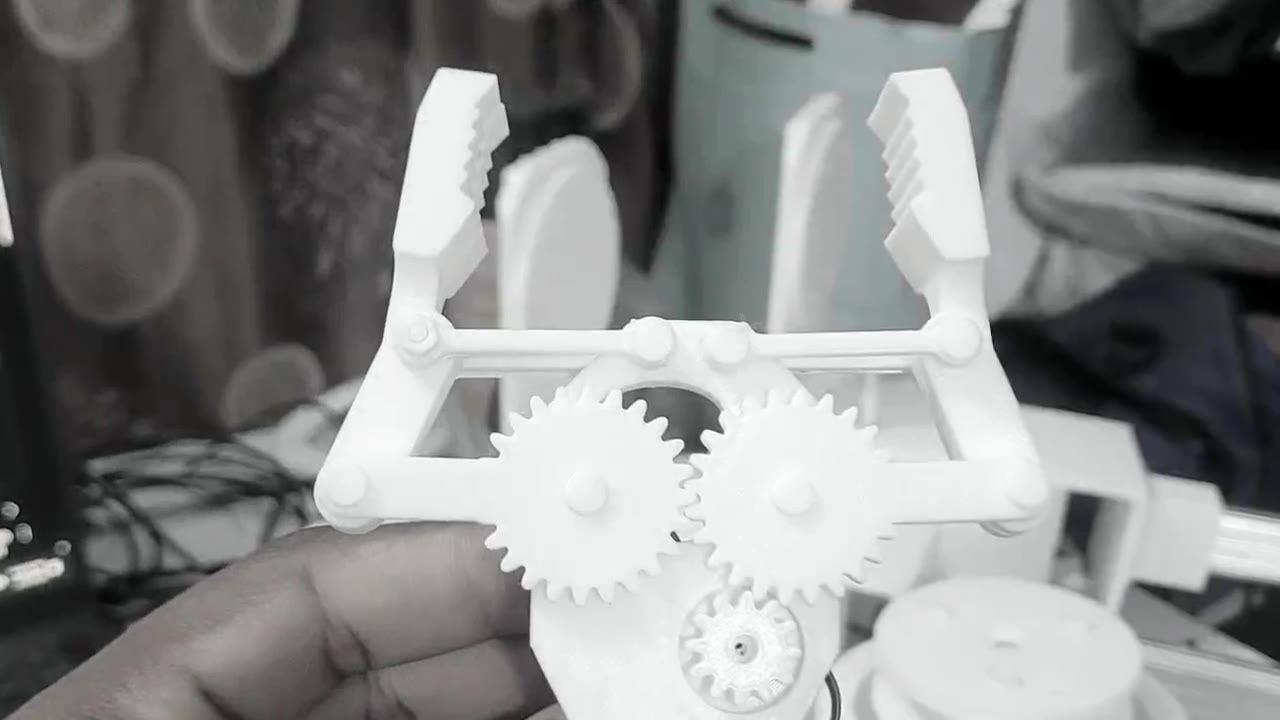
A robot is only as useful as its hands. We are building one hand and getting it right: a gear driven claw that grips the same way every time, carries real loads and can be repaired in a local workshop.
Every task a robot does ends in contact. Our claw is built so that contact goes the same way, every time.
One motor, one simple gear train, two jaws that always meet in the middle.
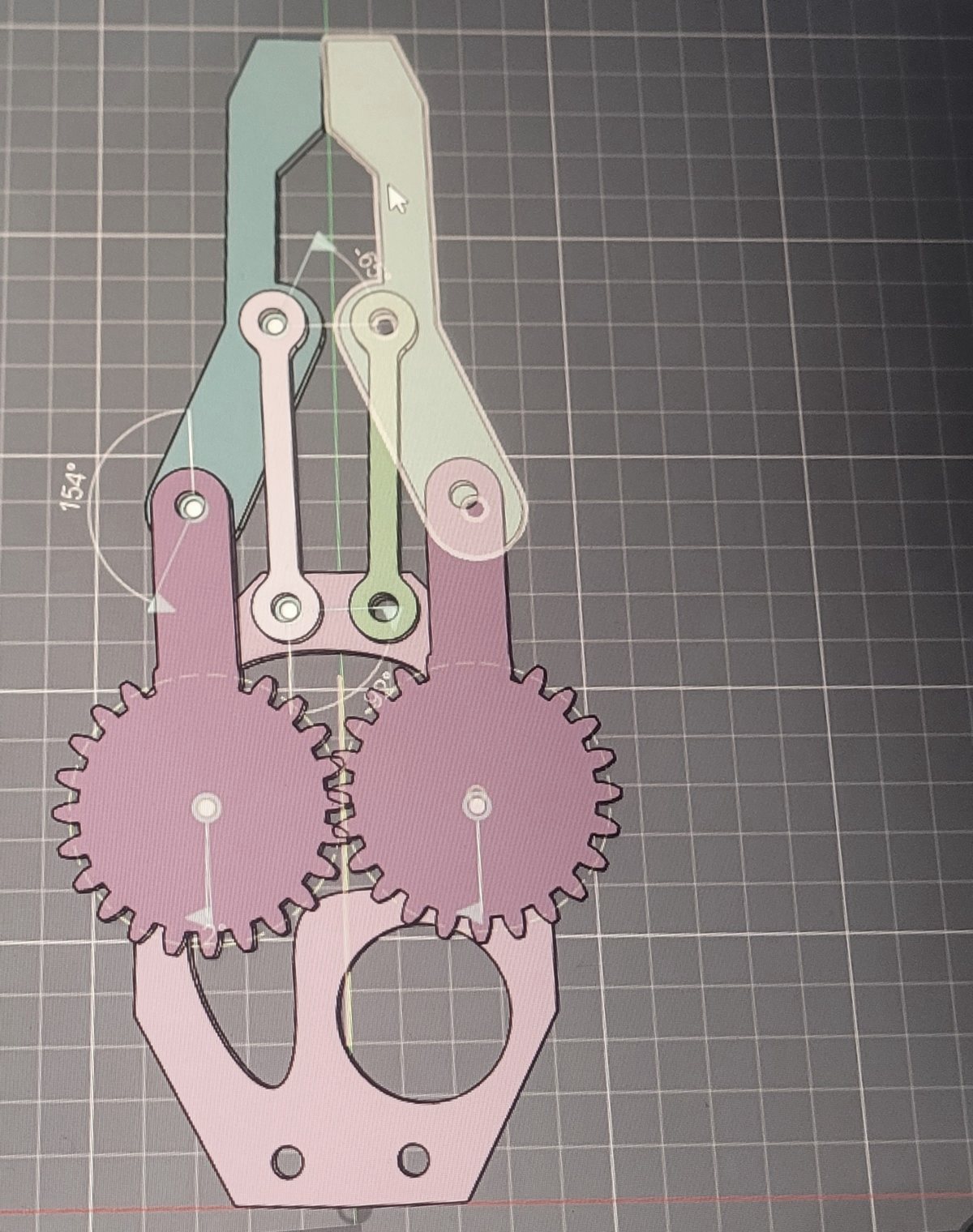
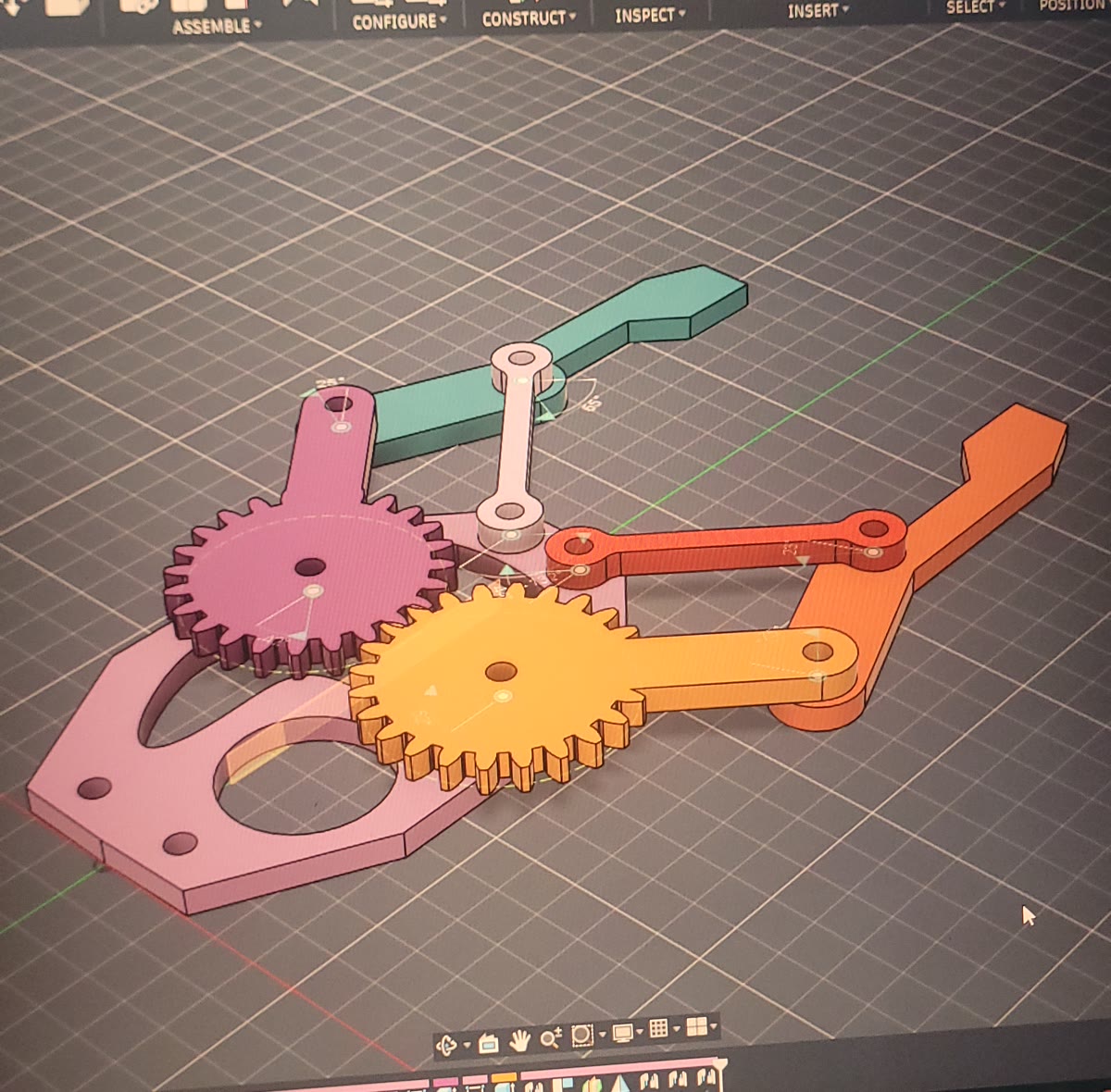
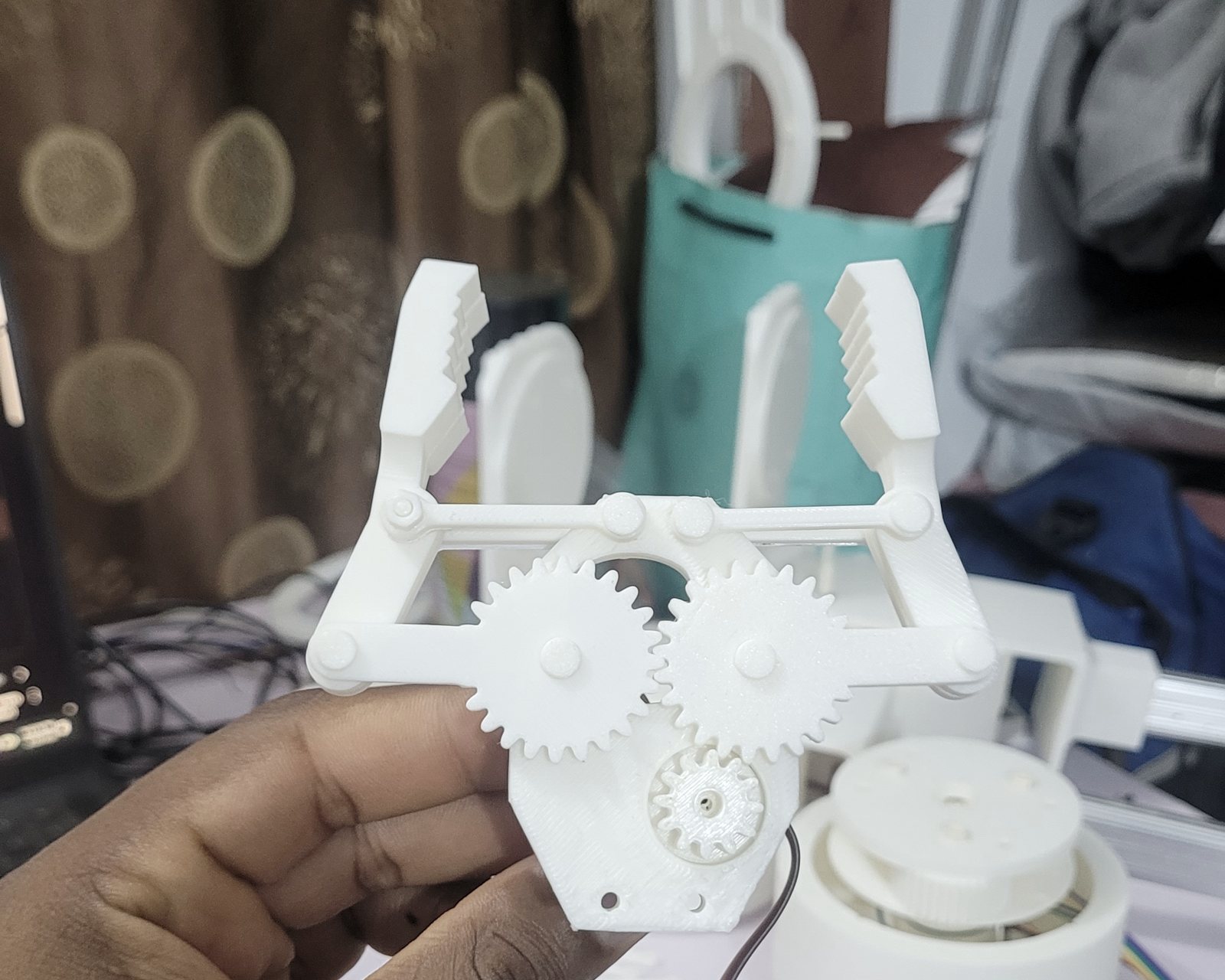
A single servo turns a small pinion. The pinion drives two meshed gears that always turn in opposite directions, so both jaws open and close together.
Short links tie each jaw back to a centre bridge. The jaws stay in step and face each other through the whole stroke, so whatever they close on is pulled to the centre.
Toothed jaw faces hold boxes, bottles and tool handles with less squeeze. Every gear, link and jaw is printed in house, so a worn part is swapped in minutes.
Why a reliable hand matters to Gernoid, and what it lets us build.
Every job a robot does ends in contact: pick, hold, place, turn. Vision and planning can be perfect and the task still fails if the grip slips. A hand that grips the same way every time turns a demo into work a customer can rely on.
Stark AI, our super intelligence (SI), learns from what happens after each grasp. A hand that behaves differently from one try to the next teaches the wrong lesson. A repeatable hand gives clean results, so every robot in the fleet improves from every grasp.
Hands are among the most expensive and fragile parts of a humanoid. One motor, printed parts and a standard servo keep the cost and the repair time low, which is how a robot becomes something a business can rent by the month.
A hand that knows how hard it is squeezing can stop before it hurts a person or crushes what it holds. Force sensing in the hand is part of keeping people safe around every Gernoid robot.
Most work in factories, warehouses and farms comes down to grasp, move and release.
Boxes, bags and totes of different sizes on a line or in a warehouse.
Loading and unloading parts at a station, shift after shift.
Lifting crates, sorting produce and moving trays.
Fetching and carrying in homes, clinics and hotels.
The claw is built and assembled. Now we make it measurable.
Measure grip force against motor current, so the claw can hold an exact force on anything it picks up.
Run thousands of open and close cycles to find which part wears first, then design it out.
Add contact sensing to the jaw faces so G1 knows a grasp is slipping before the object drops.
Have a line, a warehouse or a station where it could help? We would love to hear about it.
[email protected]Explore all research projects